
Managing appointments in a busy veterinary clinic is a constant balancing act. Between routine wellness checks, urgent sick visits, surgical procedures, and walk-in emergencies, your schedule needs to accommodate unpredictable demand while keeping wait times reasonable for every client and patient.
Poor scheduling does not just frustrate clients — it burns out your veterinary team. When the day is overbooked, appointments run late, lunch breaks disappear, and staff leave exhausted. When the schedule has too many gaps, revenue suffers and team members feel underutilized. Getting the balance right is essential for a practice that runs smoothly and profitably.
Here is how to build a scheduling system that keeps your clinic humming even on the busiest days.
Map Your Appointment Types and Time Requirements
The foundation of effective scheduling is understanding exactly how long each type of visit actually takes — not how long you wish it took. Track your real appointment durations over two to four weeks, and you will likely find that your current time blocks do not match reality.
A routine wellness exam with vaccinations might take 20 minutes for a cooperative Labrador but 35 minutes for a fearful cat. Dental cleanings require anesthesia setup and recovery time that extends well beyond the procedure itself. New client consultations consistently run longer than established patient visits because of the history-taking involved.

Create detailed appointment templates based on your data. Most veterinary clinics benefit from at least six to eight distinct appointment types: wellness exams, sick visits, surgical consultations, post-operative rechecks, dental procedures, new client visits, euthanasia appointments, and emergency slots. Assign realistic time blocks to each, and build in buffer time between appointments for notes, callbacks, and transition.
Do not forget to account for the full visit cycle, not just the exam room time. Each appointment includes check-in, technician intake, the veterinarian's exam, any diagnostics or treatments, discharge instructions, and checkout. Your scheduling template needs to reflect this entire workflow.
Build Emergency and Walk-In Flexibility Into Your Day
Veterinary medicine is inherently unpredictable. A dog that ate chocolate, a cat with a urinary blockage, or a pet hit by a car cannot wait for the next available appointment slot. Your schedule needs built-in capacity to handle emergencies without derailing the rest of the day.
Block two to three emergency slots throughout the day — typically one in the morning, one after lunch, and one in the late afternoon. If these slots are not used by 30 minutes before the blocked time, open them up for same-day appointments. This approach ensures you can handle emergencies promptly while minimizing lost revenue from unused slots.
For clinics that accept walk-ins, designate specific hours for walk-in availability and communicate these clearly to clients. Morning walk-in hours (say, 8 to 10 AM) allow you to triage and fit patients into the day while the schedule still has flexibility. Trying to accommodate walk-ins throughout the entire day leads to chaos.
Train your front desk team to triage phone calls effectively. Not every "emergency" requires an immediate appointment — some can be safely scheduled for later in the day or the next morning. Create a simple triage protocol with clear criteria for true emergencies versus urgent-but-can-wait situations. This prevents your emergency slots from being consumed by cases that could have been scheduled normally.
Leverage Technology for Smarter Scheduling
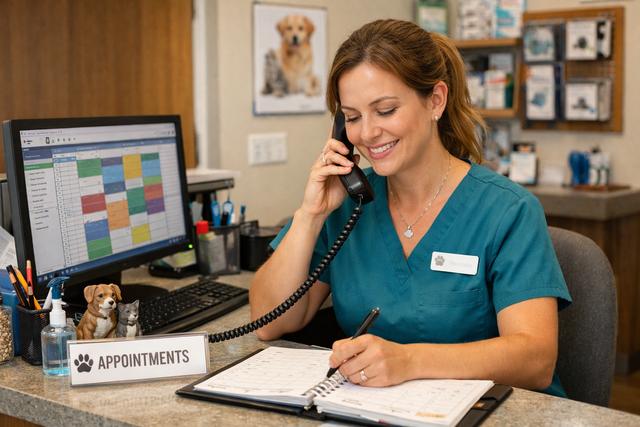
Manual scheduling with paper appointment books or basic calendars simply cannot keep up with the complexity of a busy veterinary practice. Modern veterinary practice management software transforms scheduling from a reactive task into a strategic advantage.
The right software gives your front desk team a visual overview of every provider's schedule, showing availability at a glance. Color-coded appointment types make it easy to spot scheduling imbalances — too many surgeries stacked on one day, or a provider with back-to-back new client consultations that will inevitably run over.
Online booking is becoming a client expectation, not a luxury. Practices that offer online scheduling report a 25% to 35% reduction in scheduling phone calls, freeing your front desk team for other tasks. Clients appreciate the convenience of booking at midnight when they notice their dog limping, rather than trying to call during their own work hours.
Configure your online booking carefully. Limit which appointment types are available for self-scheduling — routine wellness exams and vaccine appointments are good candidates, while surgical consultations and complex cases should still go through your team. Set appropriate booking rules, such as minimum lead times and maximum advance booking windows.
Optimize Your Schedule for Revenue and Efficiency
Strategic scheduling directly impacts your bottom line. A well-designed schedule maximizes the revenue potential of every hour your practice is open while keeping the pace sustainable for your team.
Front-load your high-value appointments. Surgeries and dental procedures should be scheduled early in the day when your team is fresh and there is maximum recovery time available. Stack wellness appointments in the late morning and afternoon when the pace naturally slows.
Monitor your schedule utilization rate — the percentage of available appointment slots that are actually filled. A healthy veterinary practice typically operates at 85% to 90% utilization. Below 80%, you have a marketing or availability problem. Above 95%, you are likely overbooking and creating wait time issues.
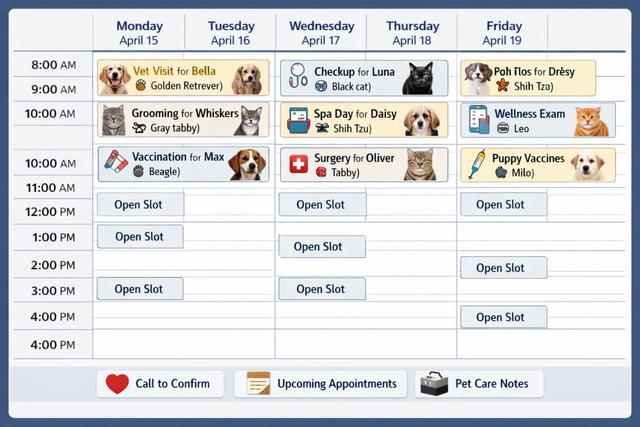
Use your scheduling data to identify patterns. Which days of the week are consistently overbooked? Which time slots regularly go unfilled? Are certain providers' schedules fuller than others? This data drives decisions about staffing, hours of operation, and where to focus your appointment marketing efforts.
Reduce No-Shows and Late Cancellations
No-shows are especially costly in veterinary medicine because many appointments involve reserved surgical suites, anesthesia preparation, or diagnostic equipment that cannot be quickly reallocated. A missed surgery appointment can mean thousands of dollars in lost revenue.
Automated reminders are your first line of defense. Send text and email reminders at 48 hours and again the morning of the appointment. Include easy confirmation and cancellation options — a simple "Reply C to confirm" text gets far better response rates than a phone call that goes to voicemail.
Implement a waitlist system for high-demand appointment types. When a cancellation opens up a surgery slot or a popular Saturday morning time, your system should automatically notify waitlisted clients and fill the gap. This turns cancellations from a revenue loss into a neutral event.
Track your no-show patterns and identify repeat offenders. Some clients chronically miss appointments — it is worth having a direct conversation about the impact on your practice and their pet's care. For clients with a history of no-shows, consider requiring a deposit for future appointments, particularly for surgical and specialty procedures.
Staff Your Schedule Appropriately
Even a perfectly designed schedule falls apart if you do not have the right staff available to support it. Match your staffing levels to your scheduling patterns rather than running the same team size all day.
If your mornings are packed with surgeries and your afternoons are appointment-heavy, schedule your surgical technicians for early shifts and your exam room technicians for later shifts. Stagger start times to ensure coverage during peak hours without paying for idle time during slow periods.
Cross-train your team so that staff can flex between roles when needed. A technician who can handle front desk duties during a lunchtime rush, or a receptionist who can assist with patient restraint during a busy afternoon, gives your schedule resilience against unexpected surges.
Hold a brief morning huddle — five minutes is enough — to review the day's schedule as a team. Flag complex cases, note any special client needs, and identify potential bottlenecks before they happen. This small daily investment in communication prevents many of the scheduling crises that derail busy clinic days.
Putting It All Together
Effective appointment scheduling in a veterinary clinic is not about any single technique — it is about building a system that accounts for the unique rhythms and unpredictability of veterinary medicine. Start by understanding your true appointment durations, build in emergency flexibility, and leverage practice management technology to automate the routine aspects of scheduling.
Monitor your key metrics — utilization rates, no-show percentages, average wait times, and revenue per hour — and adjust your approach based on real data rather than gut feel. The practices that schedule most effectively are the ones that treat their scheduling system as a living process, continuously refined based on outcomes.
Your schedule is ultimately the framework that shapes every client's experience and every team member's workday. Invest the time to get it right, and you will build a practice that delivers excellent care efficiently while keeping both your clients and your team happy.